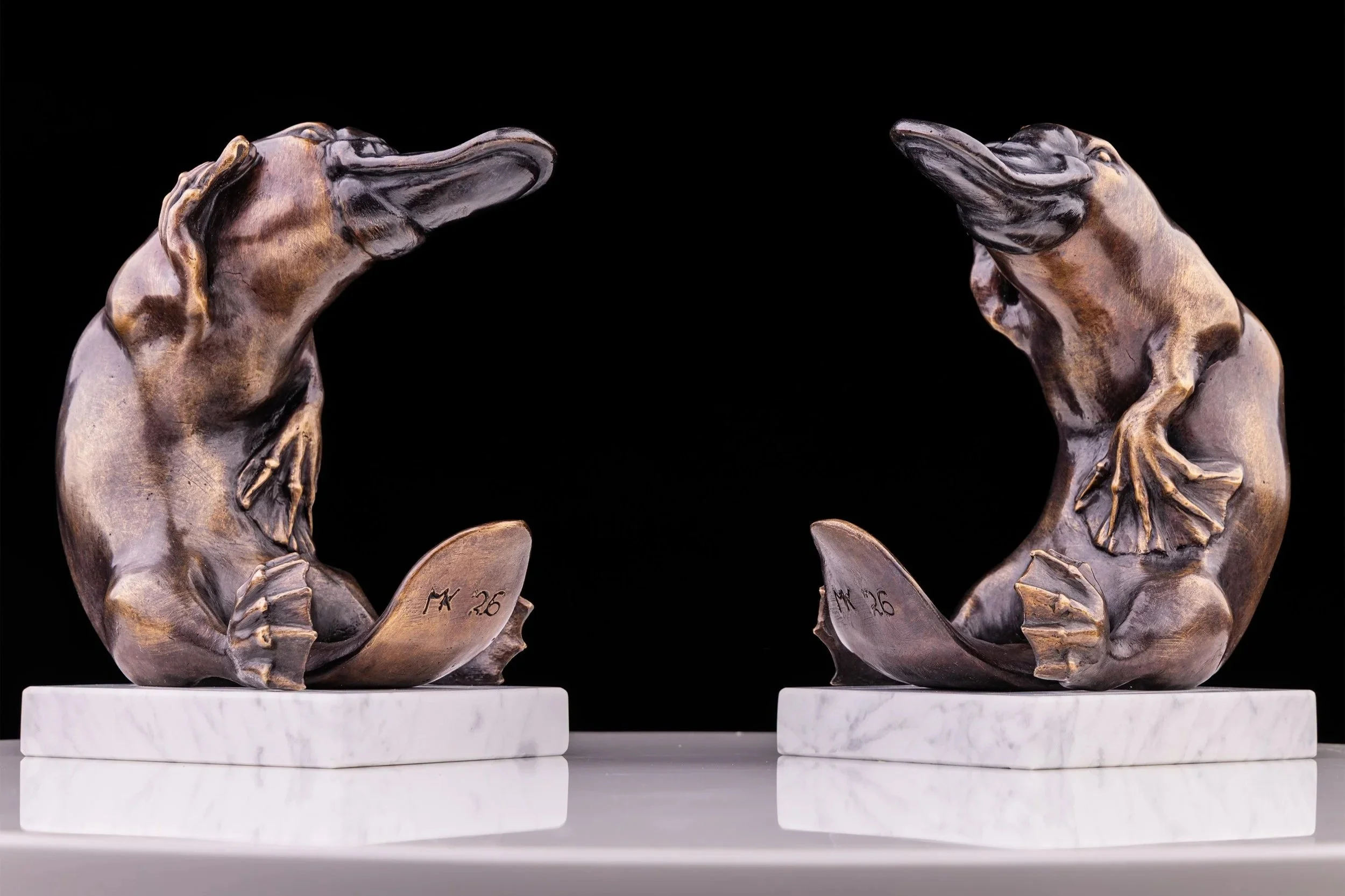
I moved from Sydney’s Sutherland Shire to Avoca Beach looking for something many artists chase for years: space. Not only physical space, but mental space too. Life in Sydney is quite expensive mainly due to mortgage costs, and I had no room to build a proper studio. I began searching for a place on the Central Coast where I could work more freely and live a little closer to nature and beaches. Eventually, I found a modest property with enough land to make the idea possible.
The vision for the studio was never industrial. I wanted it to feel warm and domestic — more like a small house than a workshop. Somewhere that could sit naturally within the landscape rather than dominate it. After moving in, I found a builder who immediately understood the idea: someone transparent, practical, and genuinely interested in creating a custom space shaped around an artist’s needs.
What followed was a lesson in patience. Approvals and paperwork took six months and close to $25,000 in government fees before construction could even begin. Local council regulations only allowed a single-storey structure of around 50 square metres, which meant every detail had to be carefully considered and every centimeter used intelligently.
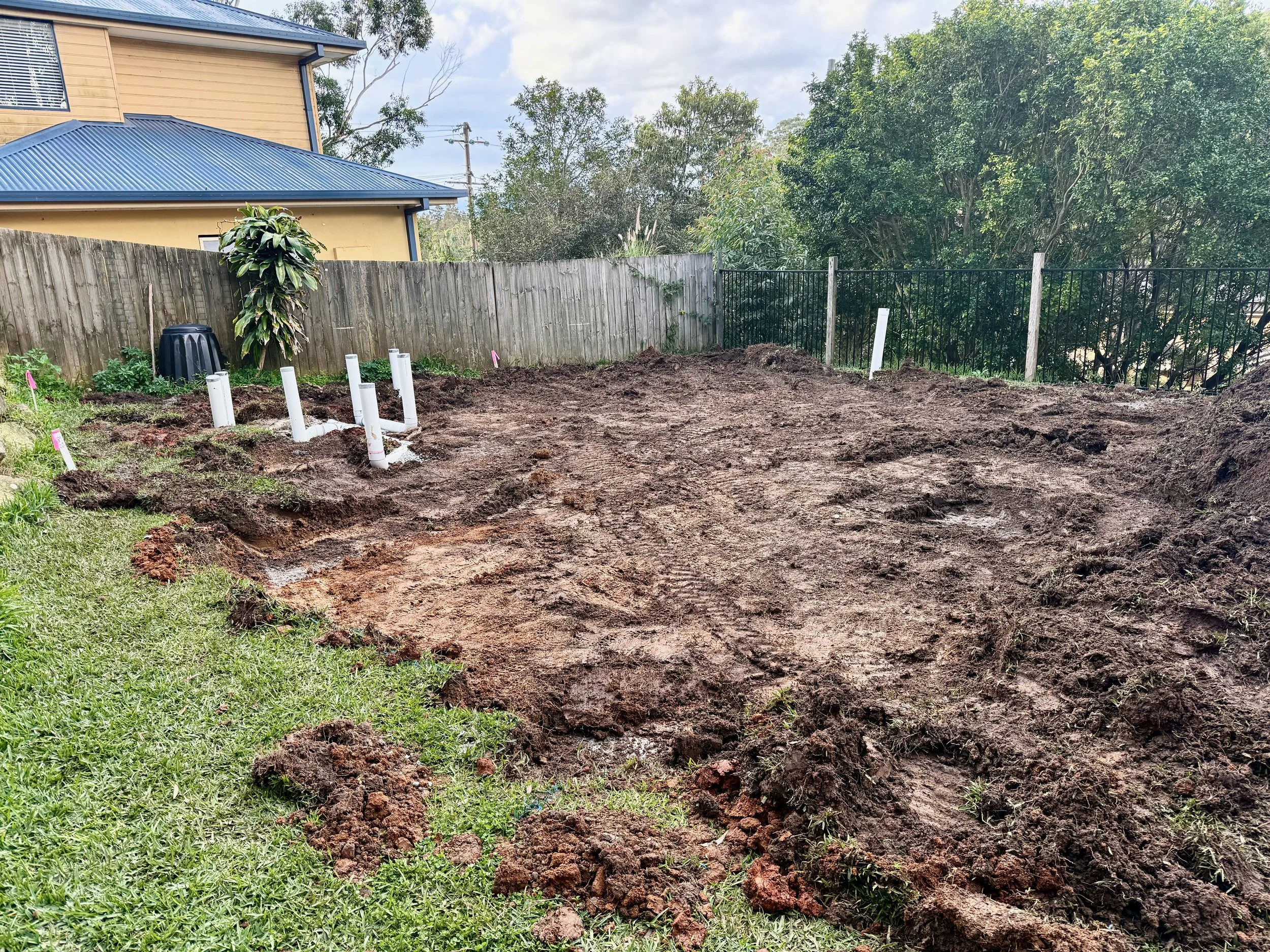
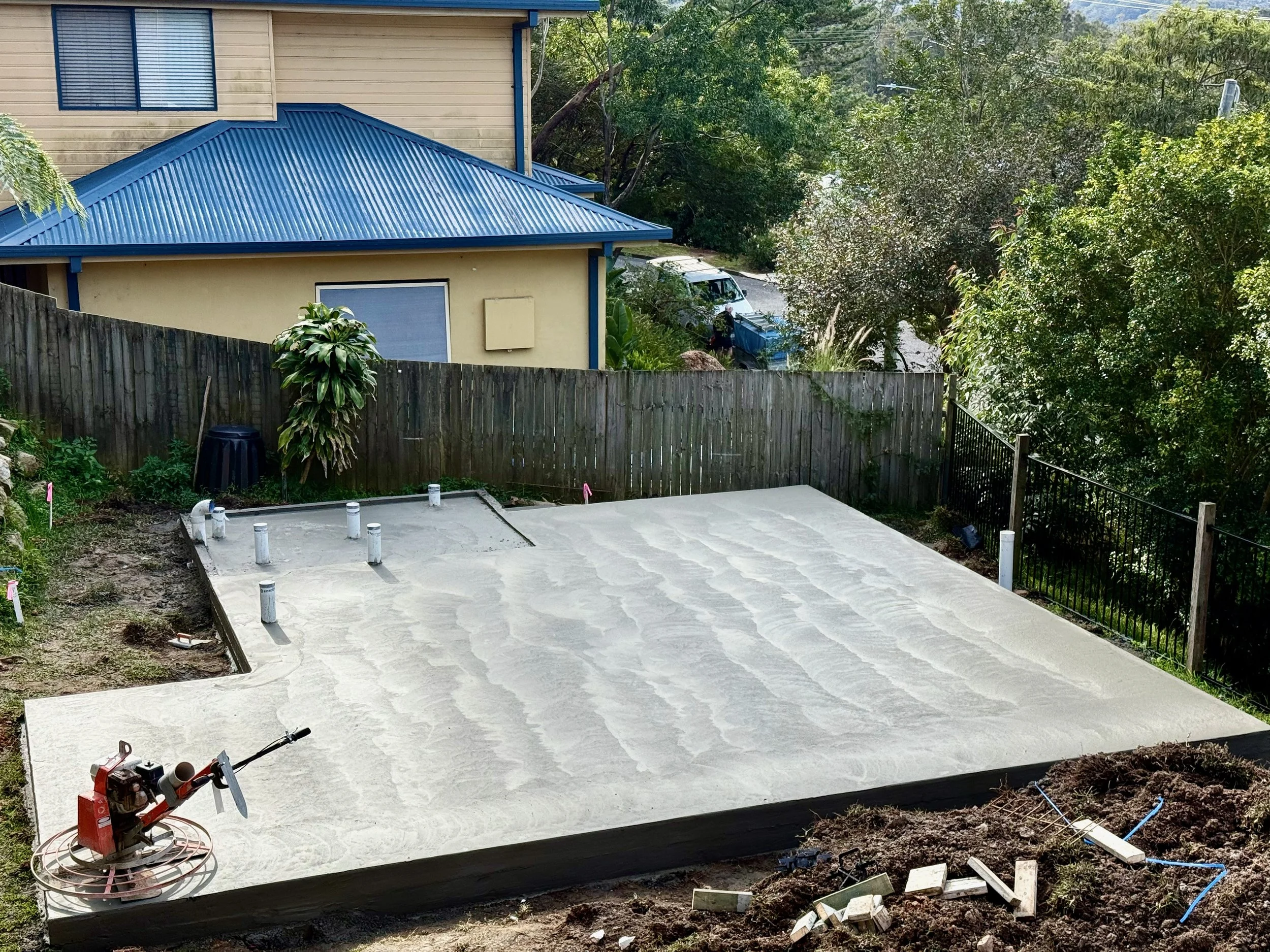
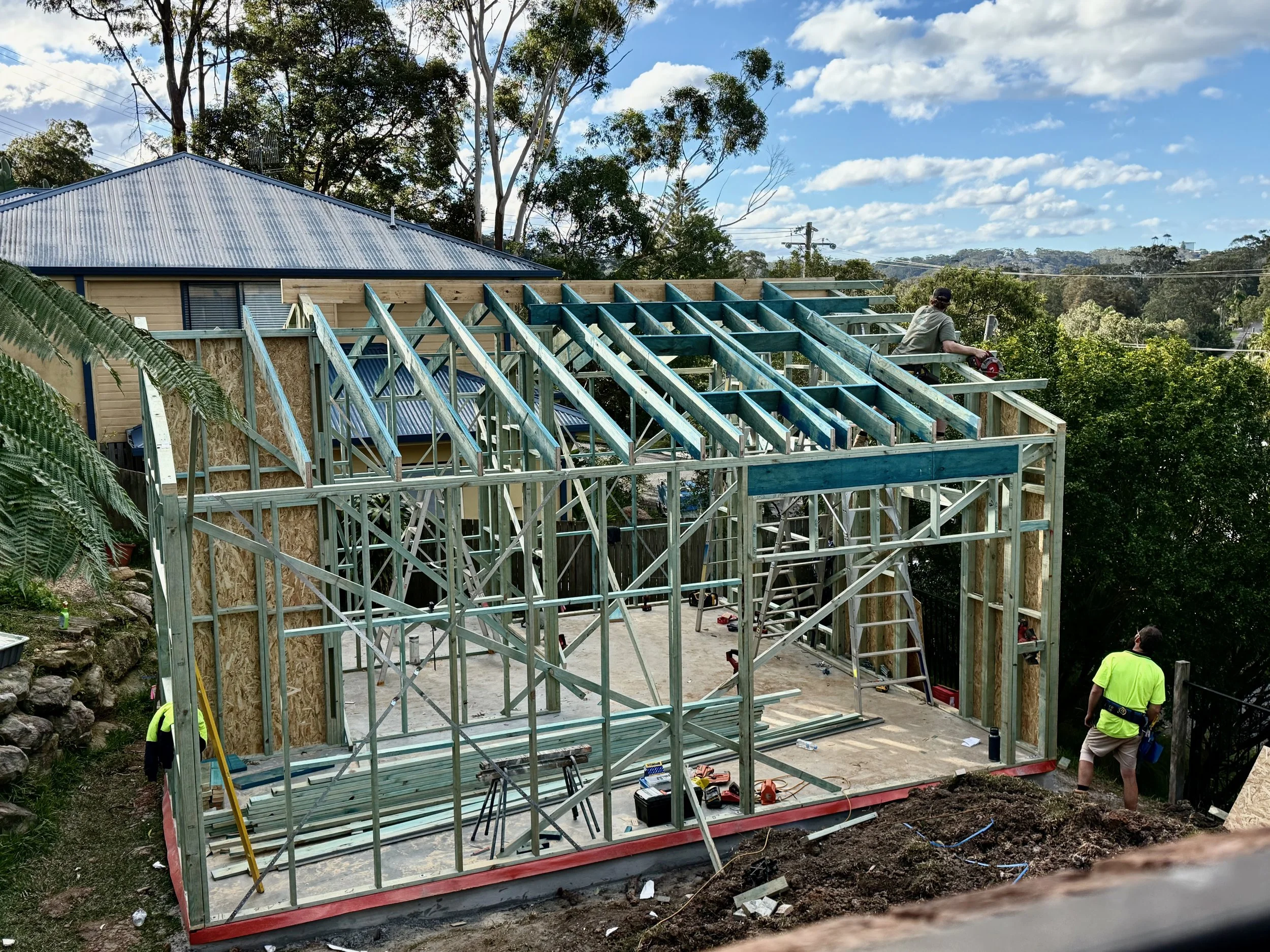
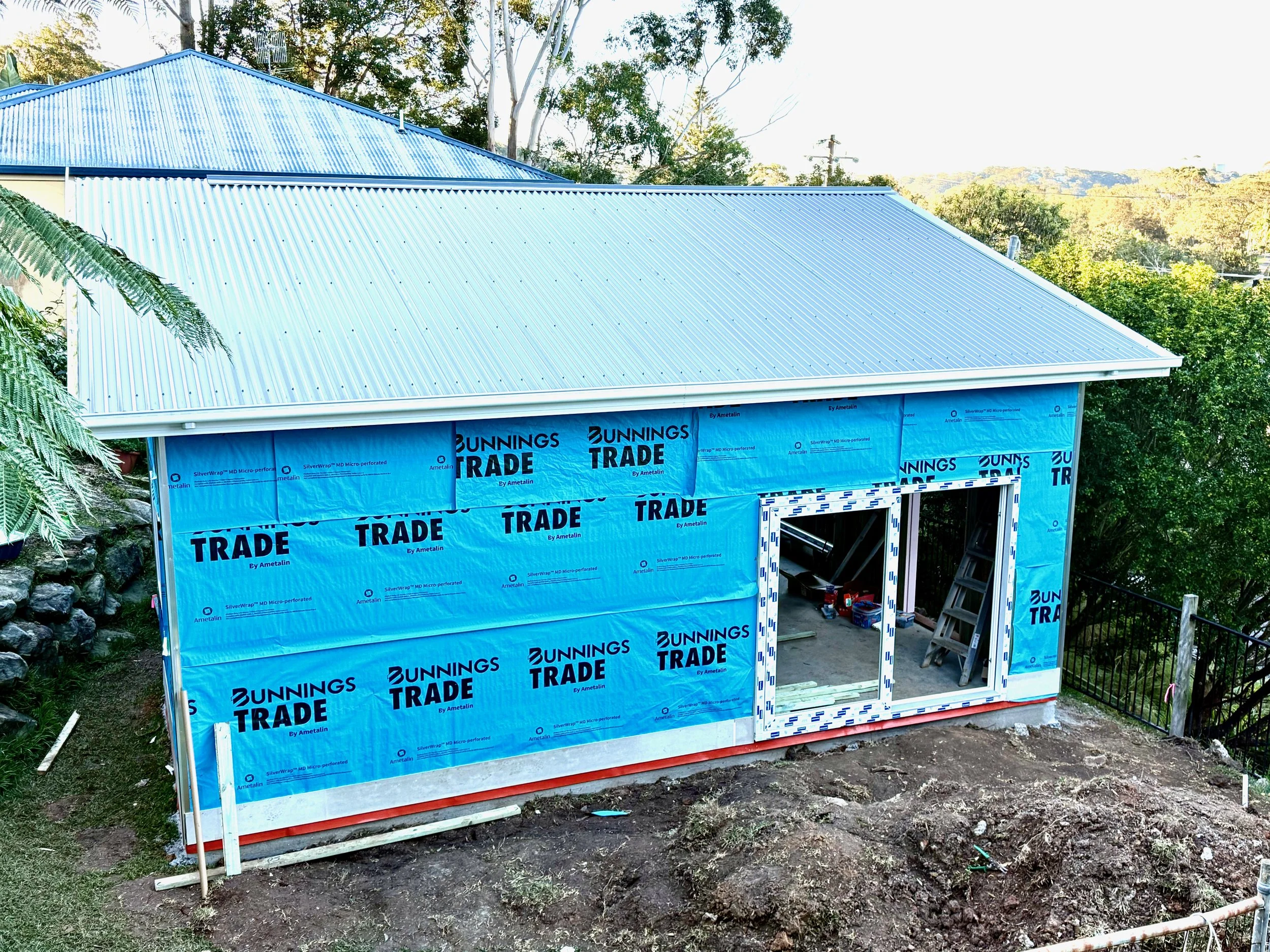
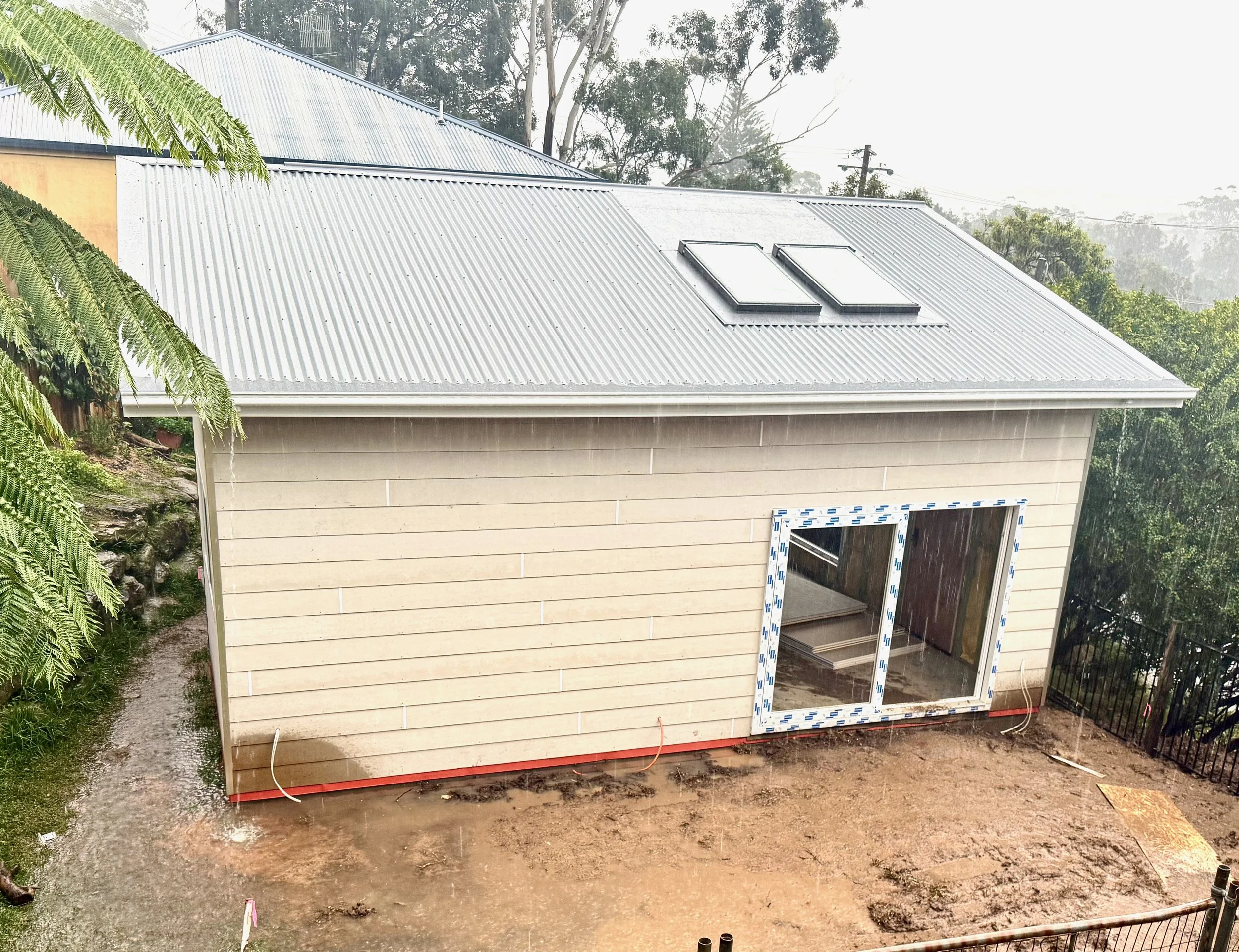
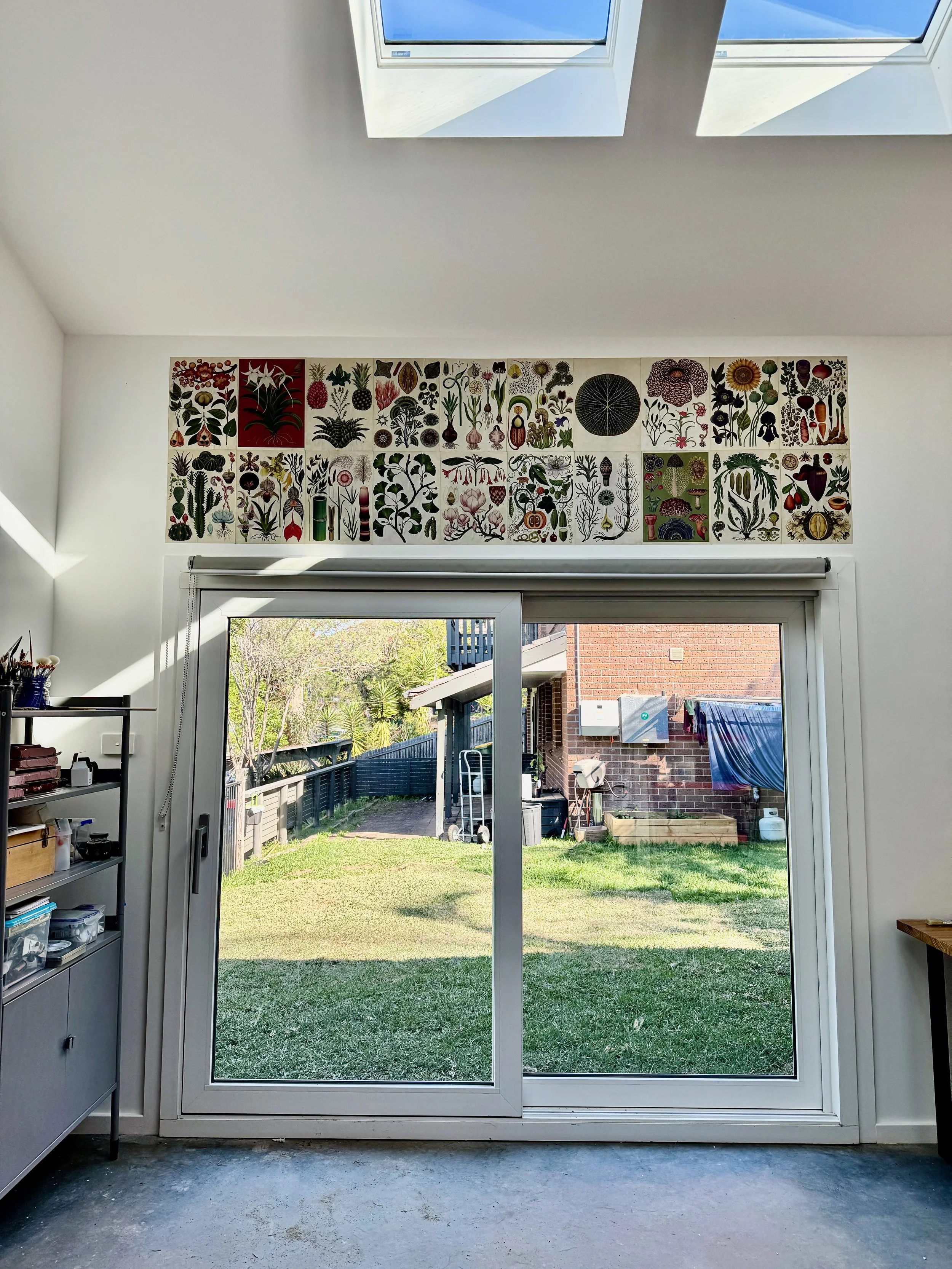
The build itself began with the foundations: a thick concrete slab anchored into the sloping ground by twelve deep pillars. From there, the structure slowly emerged —framing, roofing, insulation, skylights, windows, and cladding. The skylights were positioned on the northern side to bring in soft natural light without harsh direct sun, something especially important for artists.
Comfort was also essential. Having grown up in Europe, I always found many Australian buildings difficult to live or work in during winter and summer alike. I invested in European-style double-glazed windows and proper insulation, which transformed the atmosphere of the studio entirely — quieter, cooler in summer, warmer in winter, and calm enough to concentrate for long hours.
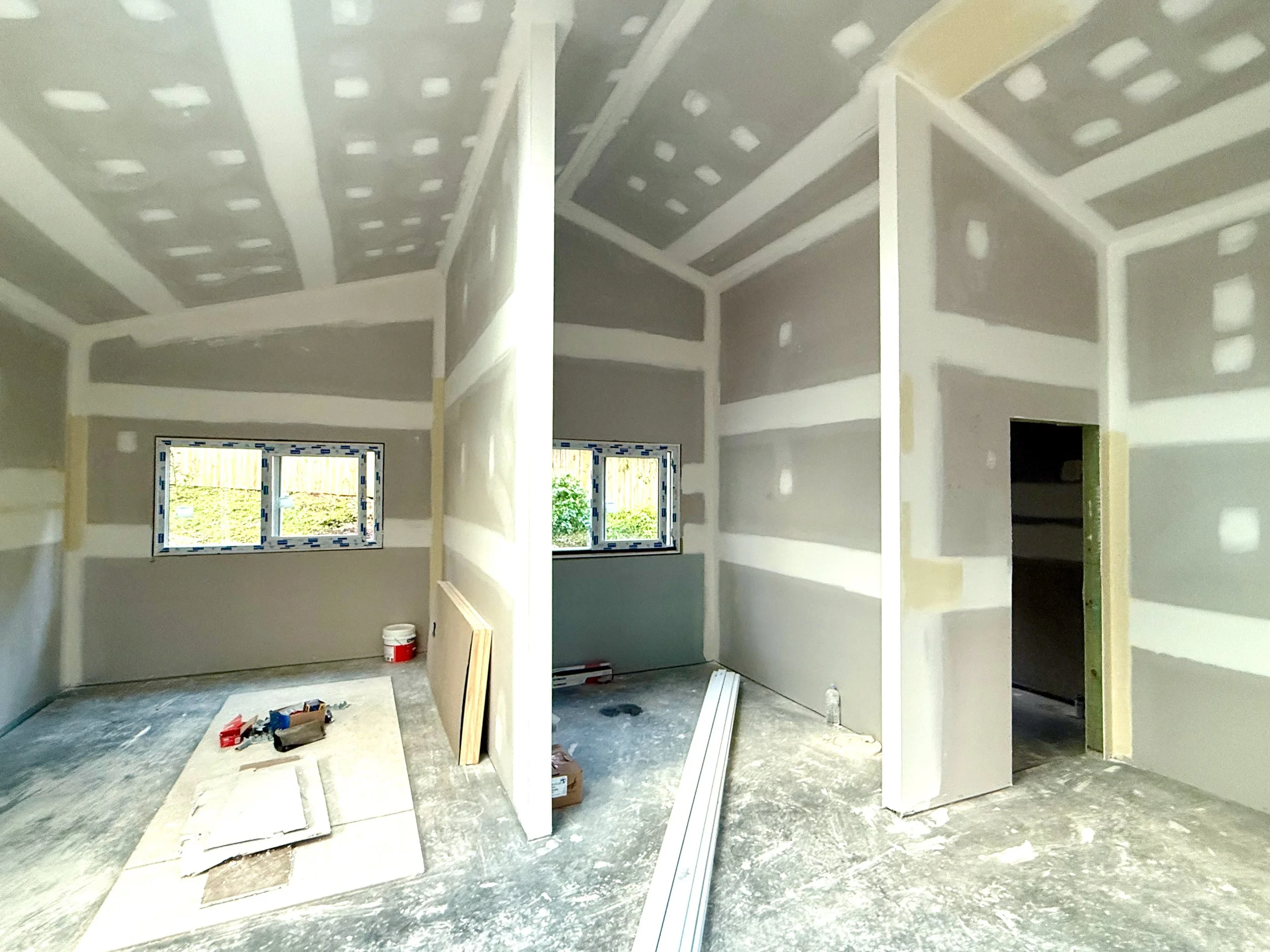
There was also practicality behind the design. As any artist knows, creative work can be unpredictable financially, so I wanted the building to have flexibility for the future. Hidden beneath the walls are provisions for a possible kitchen area, allowing the studio to one day become a granny flat if circumstances ever required it. A bathroom and shower were included from the start — essential after long sculpting sessions covered in plaster, clay, dust, and paint.
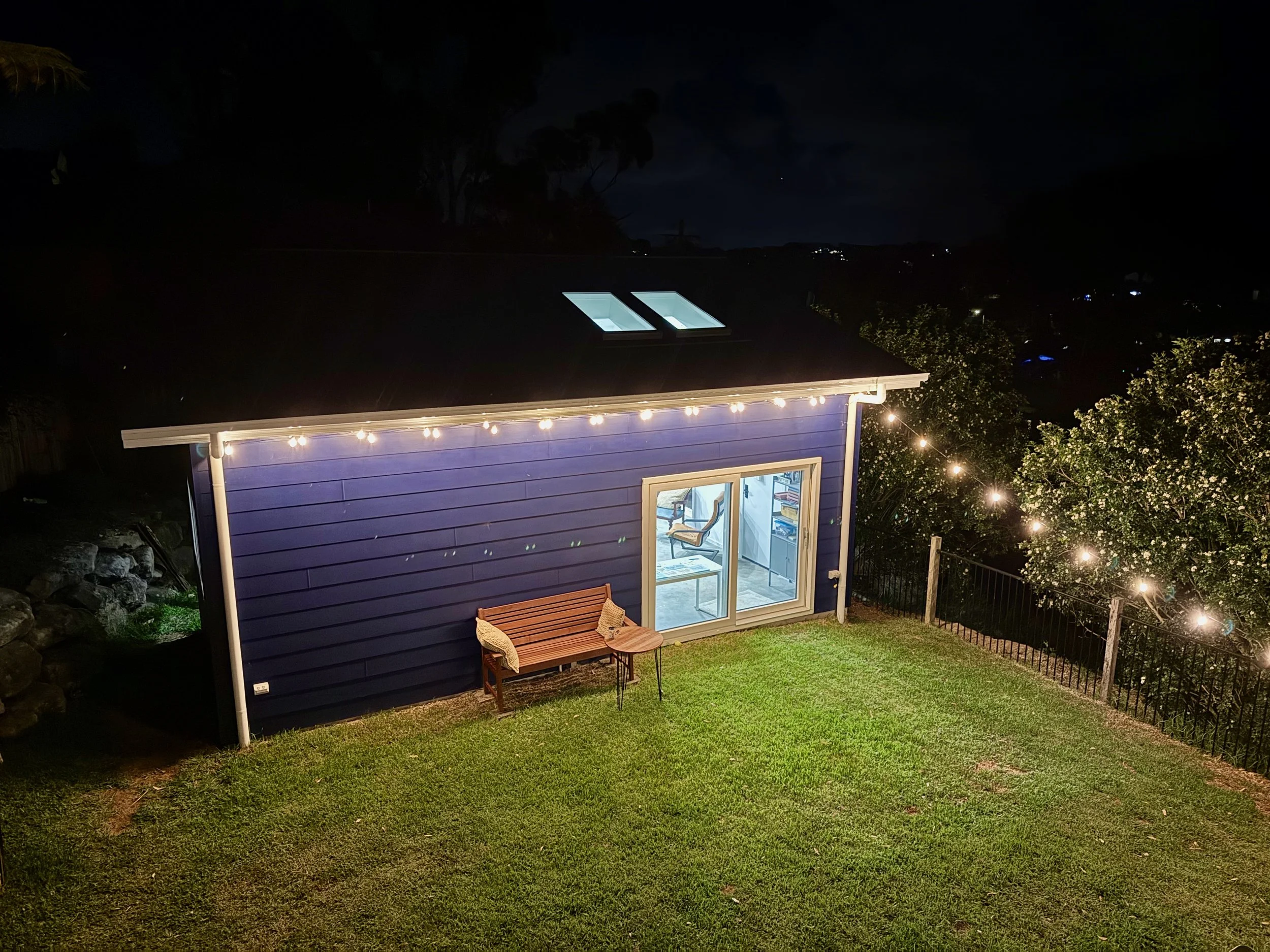
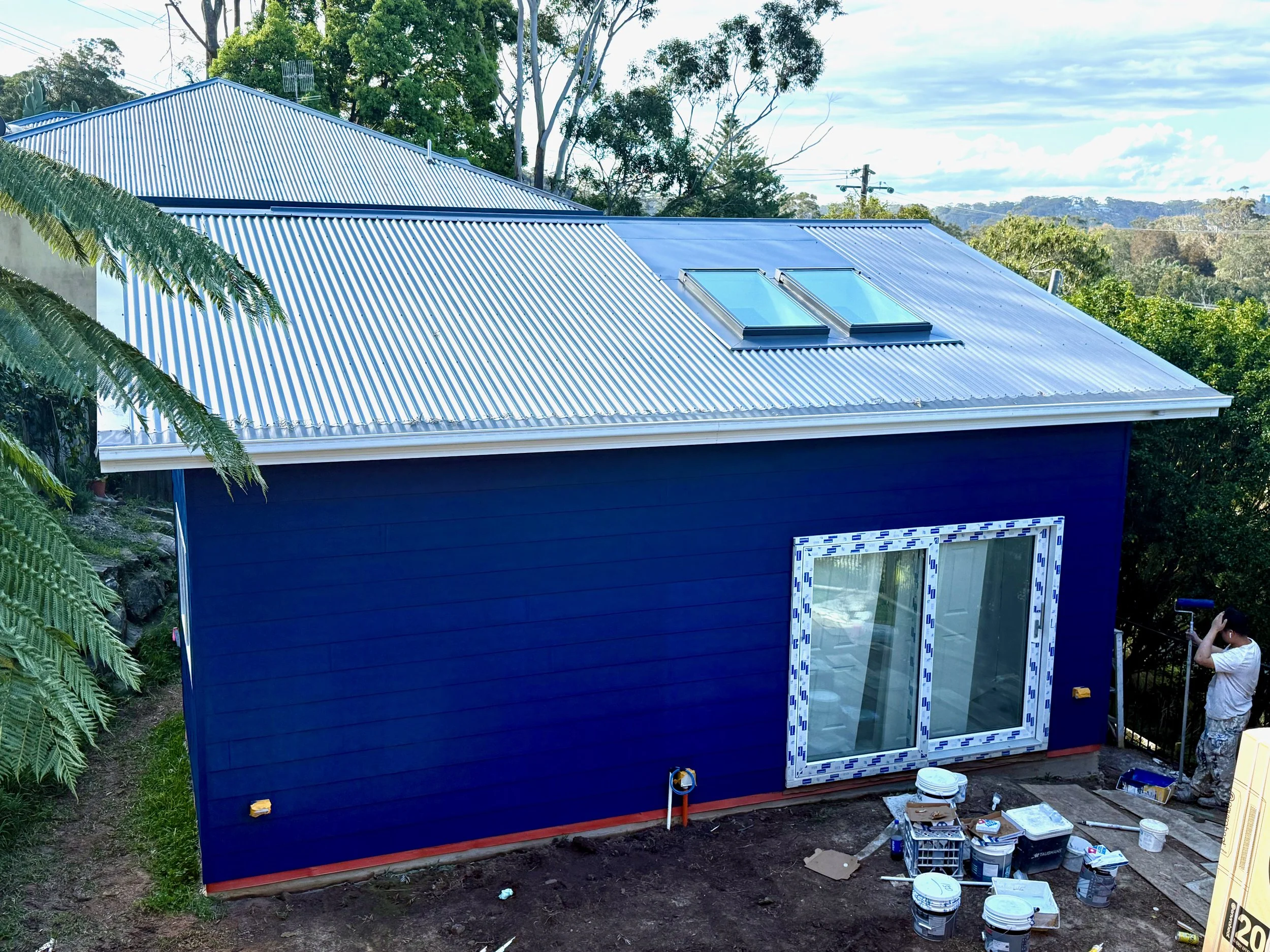
Five months after construction began, and 175,000$ later, the studio was finally complete. Decorating it became one of the most satisfying parts of the process. Amongst other things, I installed deep green backdrop curtains for life drawing sessions and figurative sculpture work, creating a dramatic contrast that helps define the contours of the human form. Sunlight now pours through the skylights during the day, while the studio glows warmly at night like a lantern tucked into the hillside.
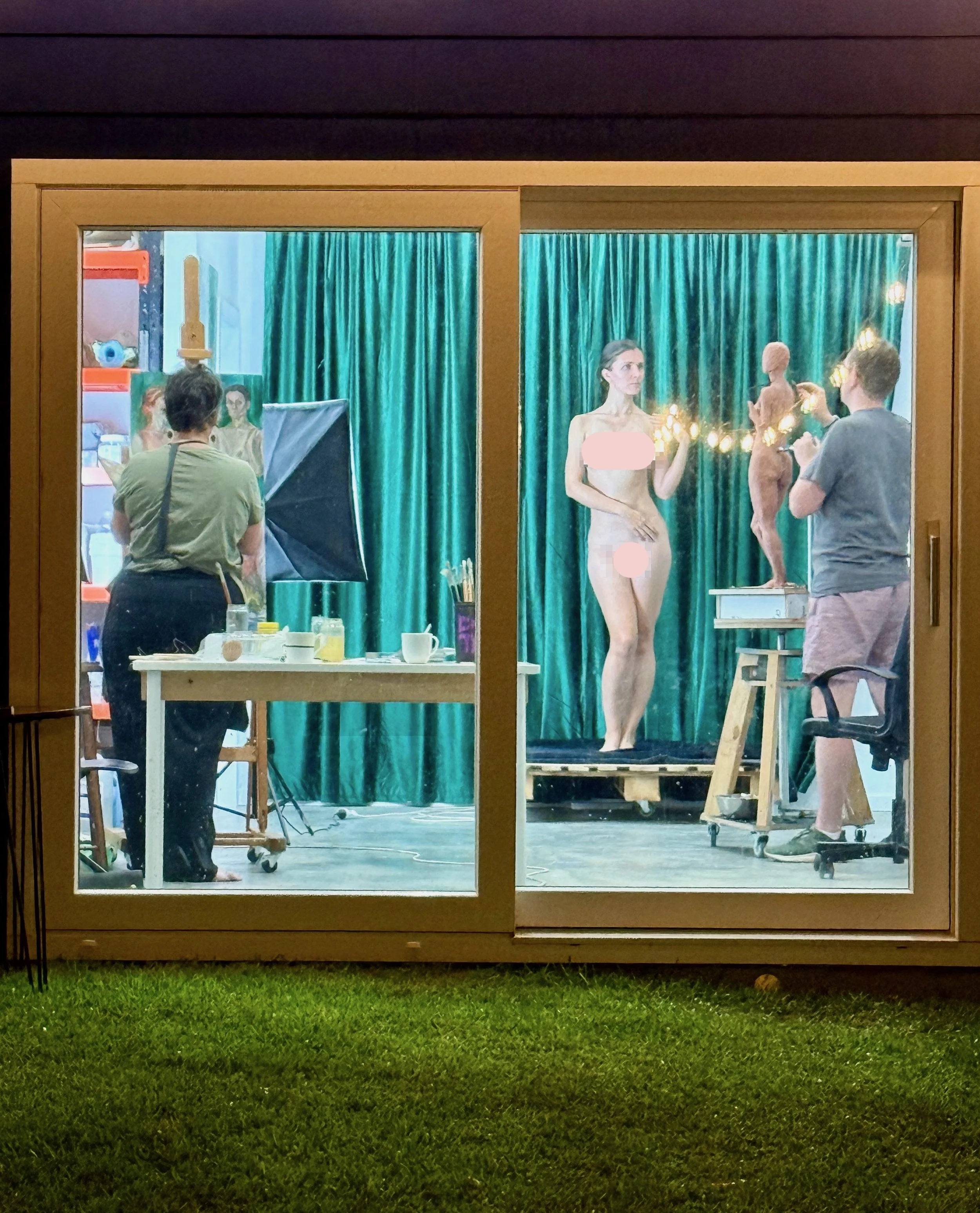
Since moving into the space in October 2025, the studio has quickly become more than just a building. I’ve begun teaching a student there, completed several sculptures and portrait studies, and progressed large decorative relief commissions that reflect another side of my practice. A couple of larger figurative works are underway, with bronze pieces expected to emerge from the series in the coming months.
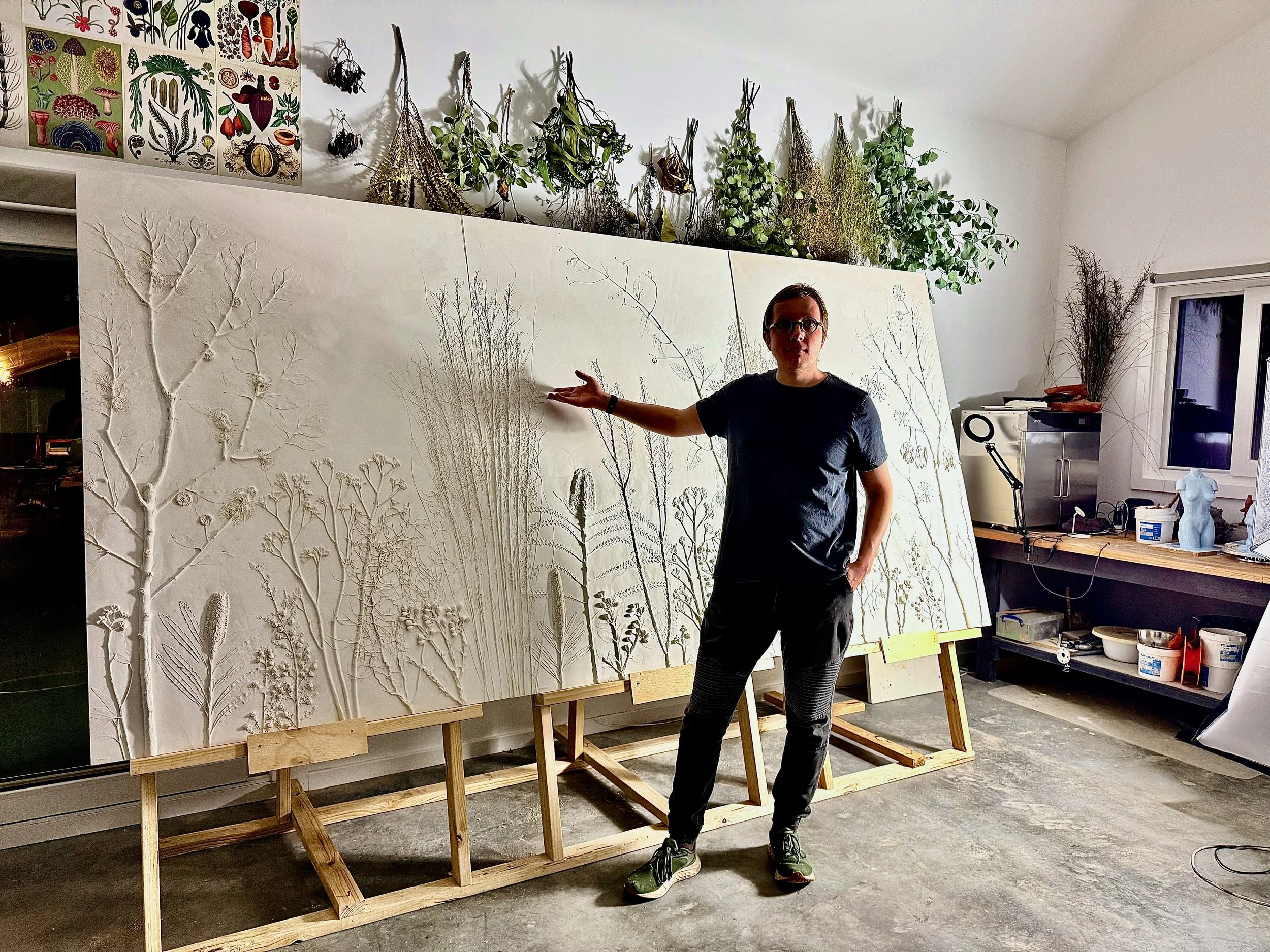
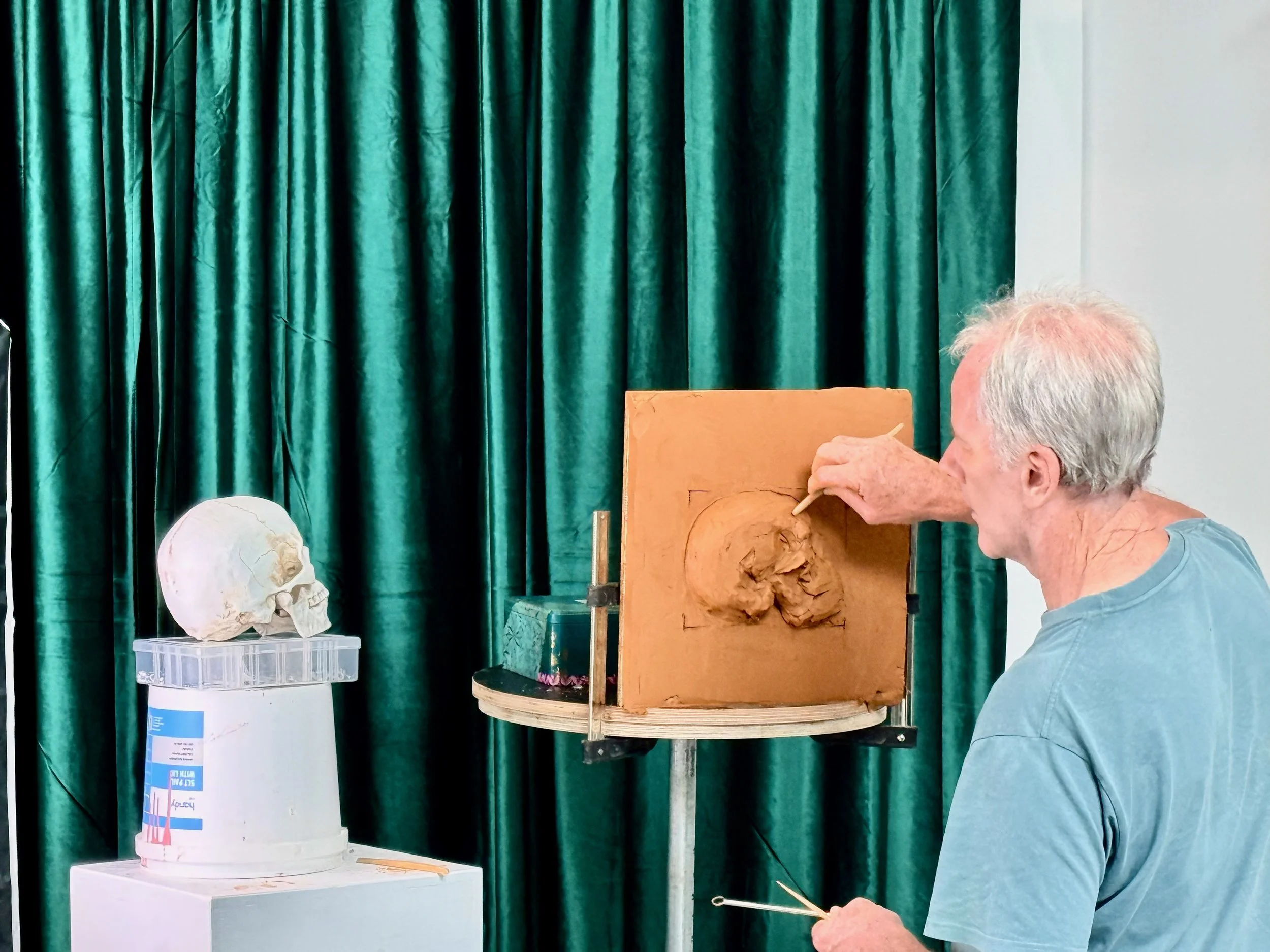
Looking back, the studio became more than a construction project. It was an attempt to build a life around making art — a place designed not only for productivity, but for continuity, experimentation, teaching, and self-development as an artist. A small building on the Central Coast, built carefully from the ground up, now holds the next chapter of my practice and life.
Thank you for your attention!